How to Choose the Right Buggy for Dubai's Desert Terrain
Dubai's desert landscape offers some of the most exciting off-road experiences in the world. Wide dunes, soft sand, and vast open spaces make riding a buggy a memorable way to explore. But not all buggies are the same, and picking the right one for your trip matters. The choice affects comfort, safety, and how much you enjoy the ride. This article walks you through the key factors to consider when selecting a buggy for the dunes around Dubai.
Understand the Types of Desert Buggies
The first step is knowing what kind of vehicle suits your needs. Most buggies used in the desert fall into two broad categories: single-seater and two-seater models. A single-seater buggy is designed for one person. It is usually lighter, more agile, and better for experienced riders who want to tackle steeper dunes at higher speeds. A two-seater buggy, on the other hand, lets you share the ride with a passenger. These models tend to be a bit heavier and more stable, making them a good choice for couples or friends who want to enjoy the scenery together.
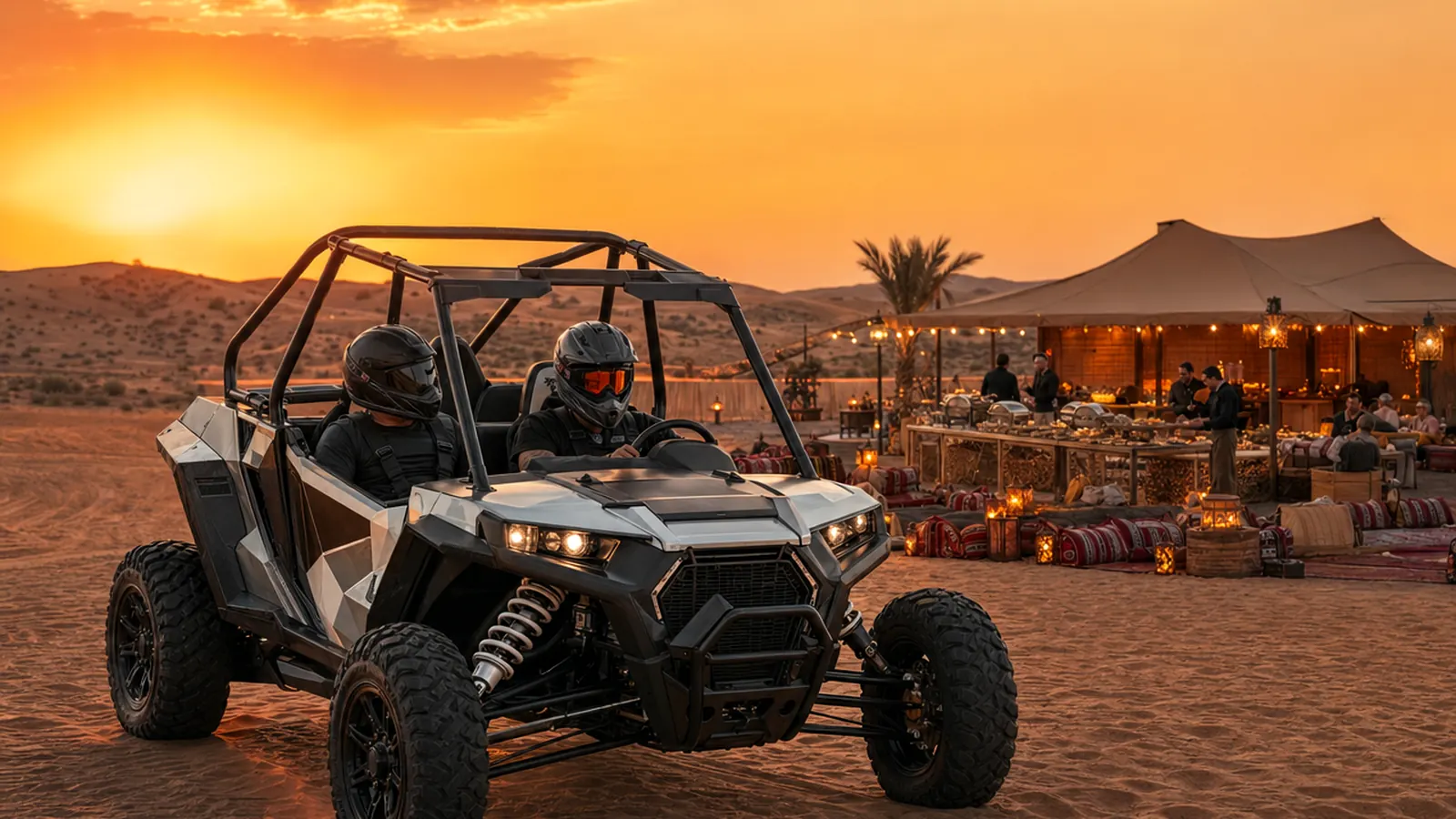
Some buggies are built with a roll cage and harnesses for extra safety, while others have a more open frame. Pay attention to the construction. A buggy with a sturdy frame and good suspension handles the rough desert terrain much better than a lighter recreational model meant for flat ground. If you plan to ride over large dunes, look for a vehicle with high ground clearance and wide tires designed for sand. Narrow tires can dig in and get stuck, ruining the experience. The type of buggy you choose directly affects how the vehicle behaves on soft sand and steep slopes.
Check the Engine and Power
The engine is the heart of any off-road vehicle. For Dubai's desert, you want enough power to climb dunes without straining. Smaller engines, around 200cc or less, might struggle on the taller dunes, especially if you are carrying a passenger. A larger engine, typically 500cc or more, gives you the torque needed to crest a dune and maintain momentum on loose sand. But more power also means more weight, which can make the buggy harder to control in tight turns. It is a trade-off between raw climbing ability and nimble handling.
Pay attention to the type of fuel the buggy uses. Most desert buggies run on petrol, but some models use diesel. Petrol engines tend to be lighter and rev higher, while diesel engines offer more low-end torque and better fuel efficiency for long rides. Think about the duration of your outing. A half-hour blast around a small area does not need the same fuel capacity as a two-hour expedition deep into the dunes. Ask the operator about the engine size and fuel range before you book. This is especially important if you plan to ride during the hotter months, when engines can overheat more easily in soft sand.

Buggy Ride Dubai | ATV Dune Quad Bike Rental Desert Safari Tours is also on Facebook.
Consider the Terrain and Route
Not all desert areas around Dubai are the same. Some have hard-packed sand mixed with gravel, while others are pure soft dunes. The type of buggy that works well on a gravel flat may not perform on soft sand. If your ride takes you through areas with large, steep dunes, you need a buggy with good traction and a low center of gravity. Buggies with a higher center of gravity can feel tippy on side slopes, which is unsettling for a novice rider. For routes that include both flat stretches and dunes, a versatile buggy with adjustable suspension settings is ideal.
Another consideration is the length of the route. Short rides near the city often use compact buggies that are easy to transport. Longer desert safaris usually require a larger buggy with more fuel capacity and better seating. Some tour operators offer a choice of vehicles based on the route. If you are not sure, ask about the difficulty of the terrain. A good operator will match you with a buggy that suits the planned track. Remember that the desert environment can change quickly. A route that was firm in the morning may become soft and challenging after a few hours of sun.
Safety Features and Briefing
Safety should never be an afterthought when choosing a dubai buggy. Even experienced riders benefit from a vehicle with proper safety features. Look for a buggy that has a secure seat belt or harness, a roll cage that surrounds the driver and passenger, and a fire extinguisher mounted within reach. Some buggies also have a kill switch that stops the engine if the driver is thrown from the seat. This is a simple but effective feature that can prevent the vehicle from continuing uncontrolled.
Before you set off, a responsible operator will give a safety briefing. This briefing should cover how to operate the controls, what to do if you get stuck in soft sand, and how to handle a sudden stop. Pay attention to the briefing, even if you have driven a buggy before. Each model handles differently. Also check if the operator provides helmets and goggles. In the desert, sand can blow into your eyes, and a helmet protects your head in case of a rollover. Do not skip the helmet, even on a short ride. The desert is unpredictable, and a rollover can happen even at low speed if a dune collapses under the wheels.
Driving License and Age Requirements
Most desert buggy operators in Dubai require a valid driving license to operate the vehicle. The type of license matters. Some operators accept a standard car license, while others require a specific motorcycle or light vehicle license. Check this before you book. If you do not have a license, some operators offer passenger seats so you can still enjoy the ride while someone else drives. Age restrictions also apply. Drivers usually need to be at least 18 years old, though some operators allow younger drivers with parental consent and a valid license.
If you are planning to drive yourself, confirm the license requirement directly with the operator. Do not assume that a foreign license is accepted. Some operators require an International Driving Permit, especially for tourists. It is worth confirming with whichever business you choose. This step saves disappointment on the day of your ride. For passengers, there is usually no license requirement, but they must meet a minimum age and height to safely use the seat and harness.
Ride Duration and Experience Level
Your own experience level plays a big role in choosing the right buggy. First-time riders should look for a buggy that is easy to control, with a simple steering system and predictable throttle response. Some buggies have a paddle-shift or manual transmission, which can be tricky if you are not used to it. An automatic or semi-automatic buggy is much easier to handle on sand. More experienced riders might prefer a buggy with a manual gearbox and higher horsepower for more control over the vehicle's performance on technical terrain.
The duration of the ride also matters. Short rides of 30 to 45 minutes are common for beginners. They let you get a feel for the buggy without committing to a long session. Extended rides, lasting one to two hours, require a buggy that is comfortable over time. Hard seats and limited legroom can make a long ride unpleasant. If you plan to ride for more than an hour, choose a buggy with padded seats and enough space to shift position. Some buggies also have a canopy or shade, which is a welcome relief during the hotter parts of the day.
Time of Day and Weather
The time of day you choose to ride affects your buggy choice. Early morning and late afternoon are popular times because the light is softer and the temperature is lower. A sunset ride offers dramatic views as the sun dips behind the dunes, but the low light can make it harder to see dips and obstacles. Some buggies have better headlights or LED light bars that improve visibility in twilight conditions. If you plan a sunset ride, ask the operator whether the buggy has adequate lighting for the return trip after dark.
Weather also plays a role. On a windy day, sand can reduce visibility and make the ride less enjoyable. A buggy with a windscreen or a full cage helps keep the sand out of your face. During the summer months, the heat can be intense even in the late afternoon. A buggy with good ventilation and a light-coloured seat that does not absorb as much heat is more comfortable. Some operators provide cooling vests or neck wraps. It is a small detail, but it can make a big difference in how much you enjoy the experience.
Check the Condition of the Vehicle
Before you get in, take a moment to inspect the buggy. Look at the tires. They should have enough tread for sand, and the tire pressure should be appropriate for desert driving. Over-inflated tires reduce traction on soft sand. Check for any visible damage, such as cracks in the frame or loose bolts. A well-maintained buggy will have clean filters and no leaking fluids. If something looks off, speak up. A responsible operator will be happy to address your concerns or switch you to a different vehicle. Your safety depends on the condition of the buggy, not just the operator's reputation.
Ask about the maintenance schedule. Operators who service their buggies regularly are more likely to provide a reliable vehicle. This is especially important for longer rides, where a breakdown in the middle of the desert can be a serious inconvenience. It is worth confirming with whichever business you choose that the buggy has been checked recently. A little caution now saves a lot of trouble later.
Book with a Local Operator
Once you have a clear idea of what you need, it is time to find an operator that offers the right dubai buggy for your plans. Many tour companies in the Barsha Heights area and beyond provide desert buggy rentals and guided tours. One local option is Buggy Ride Dubai | ATV Dune Quad Bike Rental Desert Safari Tours, located at Warsan Tower - 1st Floor Office 106 Al Rabee'a 2 - Al Thanyah First - Barsha Heights - Dubai - United Arab Emirates. As with any rental, confirm the vehicle's specifications, the route, and the safety equipment before you book. A good operator will answer your questions clearly and help you choose the buggy that fits your needs.